
Stacking joint method of transformer silicon steel sheets
When stacking transformer cores, there are three different seam methods. One is direct seam, which is characterized by convenient processing and stacking, large overlap area, and therefore the stacked core structure has good strength, strong integrity, and is not easily deformed. However, it can only be used for hot-rolled silicon steel sheets. If used for cold-rolled oriented silicon steel sheets with good magnetic properties along the rolling direction, the magnetic flux at the joint does not pass along the rolling direction, resulting in a deterioration of magnetic properties and an increase in no-load losses.
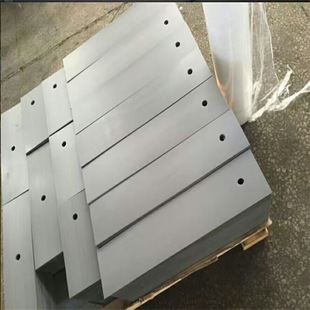
Another type is semi straight and semi oblique joint, used for cold-rolled oriented silicon steel sheets. The characteristic of this type of joint is that direct and oblique joints are replaced in the core laminations. When the width of the core column piece and the iron yoke piece are the same, the oblique joint has a 45 ° overlap area accounting for 50% of the corner. The magnetic performance is significantly improved compared to direct joint, the structure is reliable, and the cutting and stacking are also convenient. The utilization rate of silicon steel sheets is high. However, due to the fact that there are still some direct seams that do not fully utilize the directionality of cold-rolled oriented silicon steel sheets, the no-load loss of the iron core cannot be reduced to a very small level.
Another type is full oblique joint. In order to further reduce the no-load loss of the iron core and fully utilize the characteristics of cold-rolled oriented silicon steel sheets, full oblique joint should be used. This can align the direction of magnetic flux with the rolling direction of the silicon steel sheets, resulting in minimal iron core loss. But this joint process is complex, and the overall integrity of the stacked iron core is poor.
Article source: Transformer silicon steel sheethttp://www.cheungshun.com/
-
08-27
What is the function of the iron core of the silicon steel sheet in a transformer
The commonly used transformer iron core is generally made of silicon steel sheets. Silicon steel is a type of steel containing silicon, with a silicon content of. 0.8%~4.8%. The iron core of a transfo
-
08-27
The difference between hot-rolled and cold-rolled silicon steel sheets for transformers
In daily life, silicon steel sheets are widely used in motor cores. However, in terms of manufacturing silicon steel sheets, there are two aspects: hot rolling and cold rolling. Many friends do not kn
-
08-27
Is it better for silicon steel sheets to have a higher silicon content
The silicon steel sheet manufacturer's answer is not really satisfied with thinner silicon steel cores with higher silicon content. In terms of standards, the silicon content of thinner steel cores do
-
08-27
The difference between silicon steel sheet and silicon steel sheet
silicon steel sheetElectrical silicon steel sheets are commonly known as silicon steel sheets or silicon steel sheets. It is an electrical silicon steel with a silicon content of up to 0.8% -4.8%, mad
Copyright © 2026 Jiangmen Cheungshun Electric Products Factory Co., Ltd. All rights reserved xml site map