
The difference between silicon steel sheet and silicon steel sheet
silicon steel sheet
Electrical silicon steel sheets are commonly known as silicon steel sheets or silicon steel sheets. It is an electrical silicon steel with a silicon content of up to 0.8% -4.8%, made by heating and cold rolling. Generally, the thickness is below 1mm, so it is called thin plate. Generally speaking, silicon steel sheets belong to the category of sheet metal and are an independent branch due to their special use.
Silicon steel sheets for electrical purposes have excellent electromagnetic properties and are important magnetic materials that cannot be lacking in power, telecommunications, and surface industries.
(1) Classification of silicon steel sheets
A、 Silicon steel sheets can be divided into two types based on their silicon content: low silicon and high silicon. Low silicon wafers with a silicon content of less than 2.8% have a certain mechanical strength and are mainly used for manufacturing motors, commonly known as motor silicon steel sheets; High silicon wafers have a silicon content of 2.8% -4.8%, and they have good magnetic properties but are relatively brittle. They are mainly used to manufacture transformer cores, commonly known as transformer silicon steel sheets. There is no serious gap between the two in practical use, and high silicon wafers are commonly used to manufacture large motors. B、 According to the production and processing technology, it can be divided into two types: hot rolling and cold rolling. Cold rolling can also be divided into two types: grain non orientation and grain orientation. Cold rolled sheets have uniform thickness, good surface quality, and high magnetic properties. Therefore, with the development of industry, there is a trend for hot-rolled sheets to be replaced by cold-rolled sheets (China has clearly required the cessation of the use of hot-rolled silicon steel sheets, which was previously known as "replacing heat with cold").
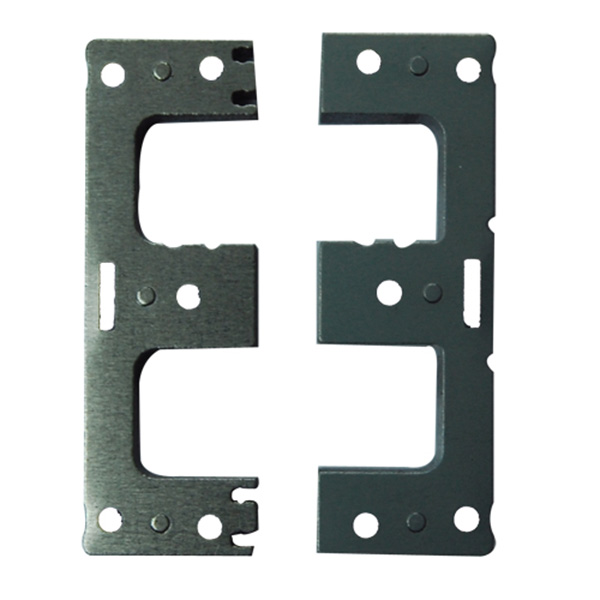
(2) Functional policy of silicon steel sheet
A、 Low iron loss. The more important policy for quality is that countries around the world classify trademarks based on iron loss value. The lower the iron loss, the higher the trademark and the higher the quality.
B、 High magnetic induction intensity. Silicon steel sheets that can achieve higher magnetic induction under the same magnetic field can be used to manufacture motor or transformer cores with smaller volume and weight, which can relatively save silicon steel sheets, copper wires, and insulation materials. C、 The stacking coefficient is high. The surface of silicon steel sheets is smooth, flat, and of uniform thickness, which improves the stacking coefficient for manufacturing iron cores.
D、 Good flushing performance. This is even more important for manufacturing small and micro motor iron cores.
E、 The surface has excellent adhesion and weldability to the insulating film.
F、 Magnetic aging
G、 Silicon steel sheets must be delivered after annealing and acid washing.
(1) Hot rolled silicon steel sheet for electrical purposes
Hot rolled silicon steel sheets for electrical use are made from low carbon loss ferrosilicon soft magnetic alloys as raw materials, and are hot-rolled into thin sheets with a thickness of less than 1mm. Hot rolled silicon steel sheets for electrical purposes are also known as hot-rolled silicon steel sheets.
Hot rolled silicon steel sheets can be divided into two types based on their silicon content: low silicon (Si ≤ 2.8%) and high silicon (Si ≤ 4.8%) steel sheets.
(2) Cold rolled silicon steel sheet for electrical purposes
Made from electrical silicon steel containing 0.8% -4.8% silicon as raw material, cold-rolled.
Cold rolled silicon steel sheets are divided into two types of steel strips: grain non oriented and grain oriented. Cold rolled electrical steel strip has the characteristics of smooth surface, uniform thickness, high stacking coefficient, good punching performance, and higher magnetic induction and lower iron loss than hot-rolled electrical steel strip. Using cold strip instead of hot-rolled strip to manufacture motors or transformers can reduce their weight and volume by 0% -25%. If cold-rolled orientation strip is used, its function is better. Using it instead of hot-rolled strip or low-grade cold-rolled strip can reduce the energy consumption of transformers by 45% -50%, and the working function of transformers is more reliable.
Used for manufacturing motors and transformers. Generally, grain oriented cold-rolled strips are used for motors or welding transformers, etc; Grain oriented cold-rolled strips are used as iron cores for power transformers, pulse transformers, and magnetic amplifiers.
Steel plate specifications: thickness of 0.35, 0.50, 0.65mm, width of 800-1000mm, length of ≤ 2.0m.
(3) Hot rolled silicon steel sheet for household appliances
The trademark for hot-rolled silicon steel sheets used in household appliances is indicated by J (Home), D (Electric), and R (Hot Rolled), also known as JDR. The number after JDR is the iron loss value * 100, and the number after the horizontal line is the steel plate thickness (mm) * 100. The electromagnetic function requirements for hot-rolled silicon steel sheets used in household appliances can be slightly lower, with a lower iron loss value (P15/50) of 5.40W/kg. Usually delivered without washing.
Differential motors used for various household appliances such as electric fans, washing machines, vacuum cleaners, range hoods, etc.
Article source: Transformer silicon steel sheethttp://www.cheungshun.com/
-
08-27
What is the function of the iron core of the silicon steel sheet in a transformer
The commonly used transformer iron core is generally made of silicon steel sheets. Silicon steel is a type of steel containing silicon, with a silicon content of. 0.8%~4.8%. The iron core of a transfo
-
08-27
The difference between hot-rolled and cold-rolled silicon steel sheets for transformers
In daily life, silicon steel sheets are widely used in motor cores. However, in terms of manufacturing silicon steel sheets, there are two aspects: hot rolling and cold rolling. Many friends do not kn
-
08-27
Is it better for silicon steel sheets to have a higher silicon content
The silicon steel sheet manufacturer's answer is not really satisfied with thinner silicon steel cores with higher silicon content. In terms of standards, the silicon content of thinner steel cores do
-
08-27
The difference between silicon steel sheet and silicon steel sheet
silicon steel sheetElectrical silicon steel sheets are commonly known as silicon steel sheets or silicon steel sheets. It is an electrical silicon steel with a silicon content of up to 0.8% -4.8%, mad
Copyright © 2026 Jiangmen Cheungshun Electric Products Factory Co., Ltd. All rights reserved xml site map