
Principles for selecting silicon steel sheet materials for transformers
In the process of stamping or shearing, the cutting part of the mold and the scissors are subjected to force, heat, and friction wear. The length of its service life and productivity level primarily depend on whether the mold and scissors materials have the required cutting function. In addition, the process function of this material has a significant impact on its production and grinding quality. Therefore, the working data of molds and scissors should meet the following basic functional requirements: 1) high hardness, at least higher than the hardness of silicon steel plates. 2) High wear resistance or short lifespan, suitable for frequent tool changes in molds. 3) Sufficient strength and toughness, otherwise simple deformation and cracking may occur. 4) High heat resistance requires high red hardness. Under the requirements of our own processing technology, we are satisfied with the following functions: 1) Heat treatment function, deformation, shallow decarburization, and better hardenability, which are important process functions that tool steel should have. 2) Sharp grinding, and can polish and clean sharp edges. 3) Has certain welding function, inorganic bonding ability, and cutting function. Based on the above requirements, combined with the detailed structure of cutting tools, molds, production methods, working conditions, data prices, and processing costs, the selected tools and mold data can be different. Therefore, it should be a detailed problem, analyzed in detail. The following information can be selected for reference: 1) Low speed ordinary stamping equipment is used in molds. If the output is not large, T8A and T10A are selected; For larger production, 9SiCr and CrWMn are selected. 2) High speed punching and cutting equipment can use cutting tools and molds, and high-speed steel W18Cr4V, W9Cr4V2 can be selected. 3) Although the cutting speed is not high, cutting tools and molds with high precision and disorderly grinding should be made of high-speed steel and W18Cr4V. 4) For high-speed cutting tools, molds, or tools and molds that require good wear resistance, tungsten cobalt or tungsten cobalt titanium carbide should be used. 5) For cutting tools caused by large-scale or easy to cut tools, mold grinding is difficult and assembly should be selected.
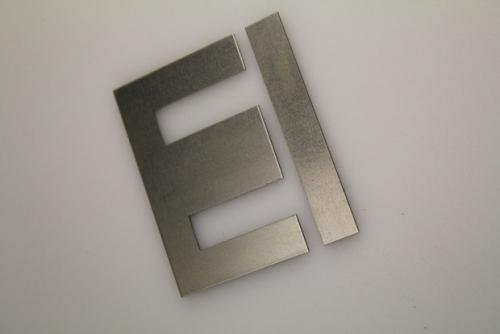
Grinding and grinding wheel data types and selection principles primarily confirm the quality elements of grinding. Grinding is one of the most widely used cutting methods. Grinding results in high machining accuracy and low roughness values. Suitable for semi precision machining and precision machining. Due to the high hardness and heat resistance of grinding wheel abrasives, grinding is also suitable for processing hardened steel and other tools that cannot cut through hard materials. Transformers produced with scissors belong to this situation. In grinding components, the grinding thickness has a greater impact on the grinding process, followed by the characteristics of the grinding wheel and the functionality of the grinding data. The following section briefly introduces the elements related to grinding thickness and wheel characteristics.
The factors that determine the grinding thickness are: 1. The circumferential speed of the grinding wheel increases the wheel speed, and the number of abrasive particles added per unit time can reduce the uniform grinding thickness. 2. If the size of the grinding wheel is larger, it indicates that the wheel size is finer. Therefore, the grinding wheel per unit length will have more abrasive particles involved in cutting, which can reduce the uniform grinding thickness. When the speed of the cutter wheel increases, the larger grinding thickness also increases accordingly, resulting in a uniform increase in grinding thickness. 4. If the diameter of the grinding wheel and the diameter of the workpiece are increased, the contact length between the grinding wheel and the workpiece is increased, thereby increasing the number of abrasive particles and reducing the uniform grinding thickness. The blade of the grinding wheel is not a continuous straight line. If the longitudinal feed rate is increased, the width of the wheel will decrease, and the contact between the grinding surface and each abrasive particle will decrease. Therefore, the remaining area is added, and the next feed amount is the cutting thickness.
Article source: Transformer silicon steel sheethttp://www.cheungshun.com/
-
08-27
What is the function of the iron core of the silicon steel sheet in a transformer
The commonly used transformer iron core is generally made of silicon steel sheets. Silicon steel is a type of steel containing silicon, with a silicon content of. 0.8%~4.8%. The iron core of a transfo
-
08-27
The difference between hot-rolled and cold-rolled silicon steel sheets for transformers
In daily life, silicon steel sheets are widely used in motor cores. However, in terms of manufacturing silicon steel sheets, there are two aspects: hot rolling and cold rolling. Many friends do not kn
-
08-27
Is it better for silicon steel sheets to have a higher silicon content
The silicon steel sheet manufacturer's answer is not really satisfied with thinner silicon steel cores with higher silicon content. In terms of standards, the silicon content of thinner steel cores do
-
08-27
The difference between silicon steel sheet and silicon steel sheet
silicon steel sheetElectrical silicon steel sheets are commonly known as silicon steel sheets or silicon steel sheets. It is an electrical silicon steel with a silicon content of up to 0.8% -4.8%, mad
Copyright © 2026 Jiangmen Cheungshun Electric Products Factory Co., Ltd. All rights reserved xml site map